CHINA / COMPANY IN FOCUS
Cambricon: when does profit turn into cash?
Profit shows the earnings a company has recognised. Operating cash flow shows how much cash its operations generated or used. Both perspectives matter: even with a strong income statement, substantial funds may be tied up in inventories and prepayments.
Cambricon / 寒武纪 · SSE:688256 · Report dated: 2026-10-23; accessed on CNINFO: 2026-10-24. The financial statements are unaudited. This article contains no current share price or price target.
The facts: quarter and nine months separately
| Indicator | 2026 Q3 · July–September | 2026 · January–September |
|---|---|---|
| Revenue | 3530,83 | 9526,40 |
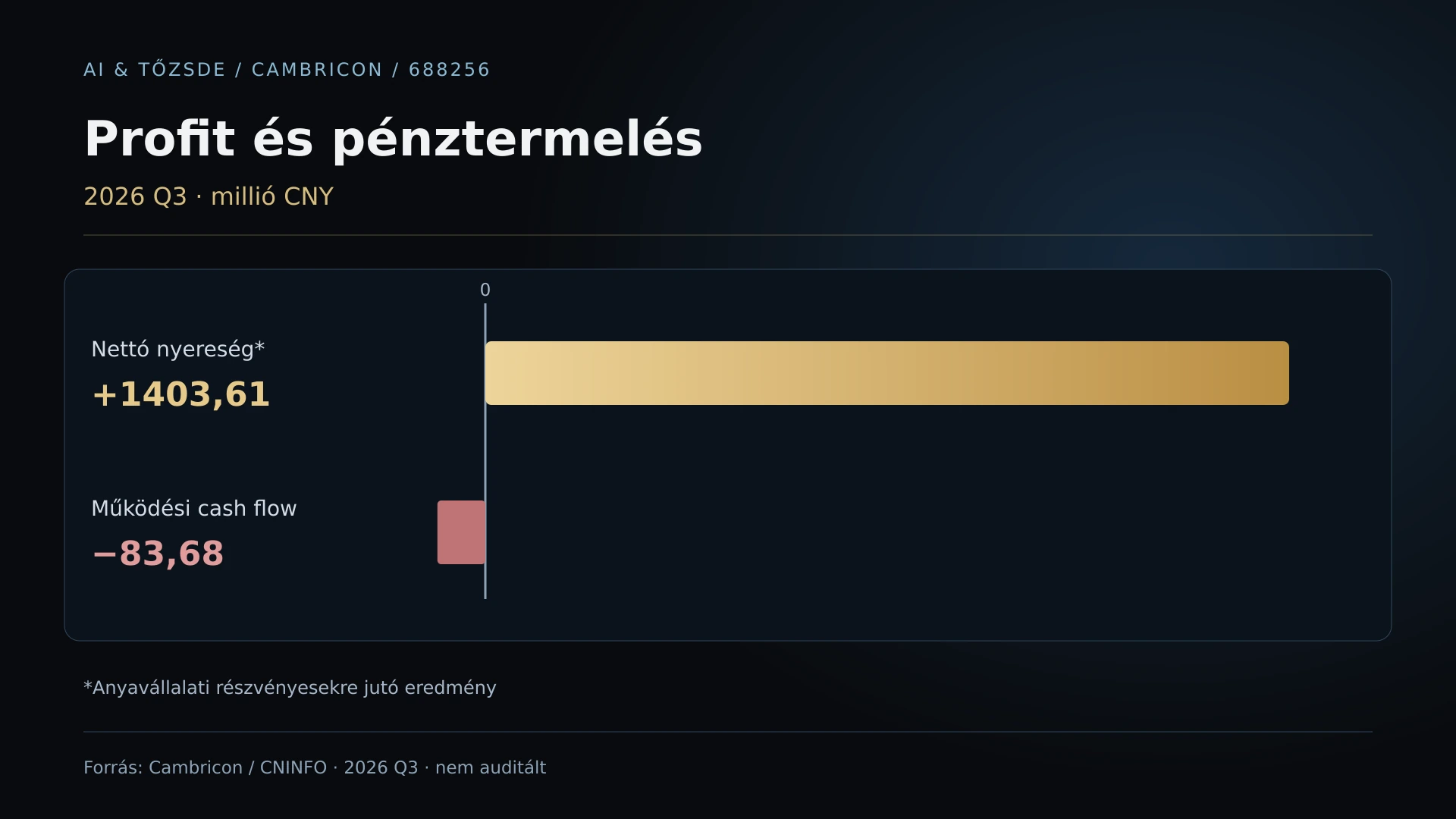
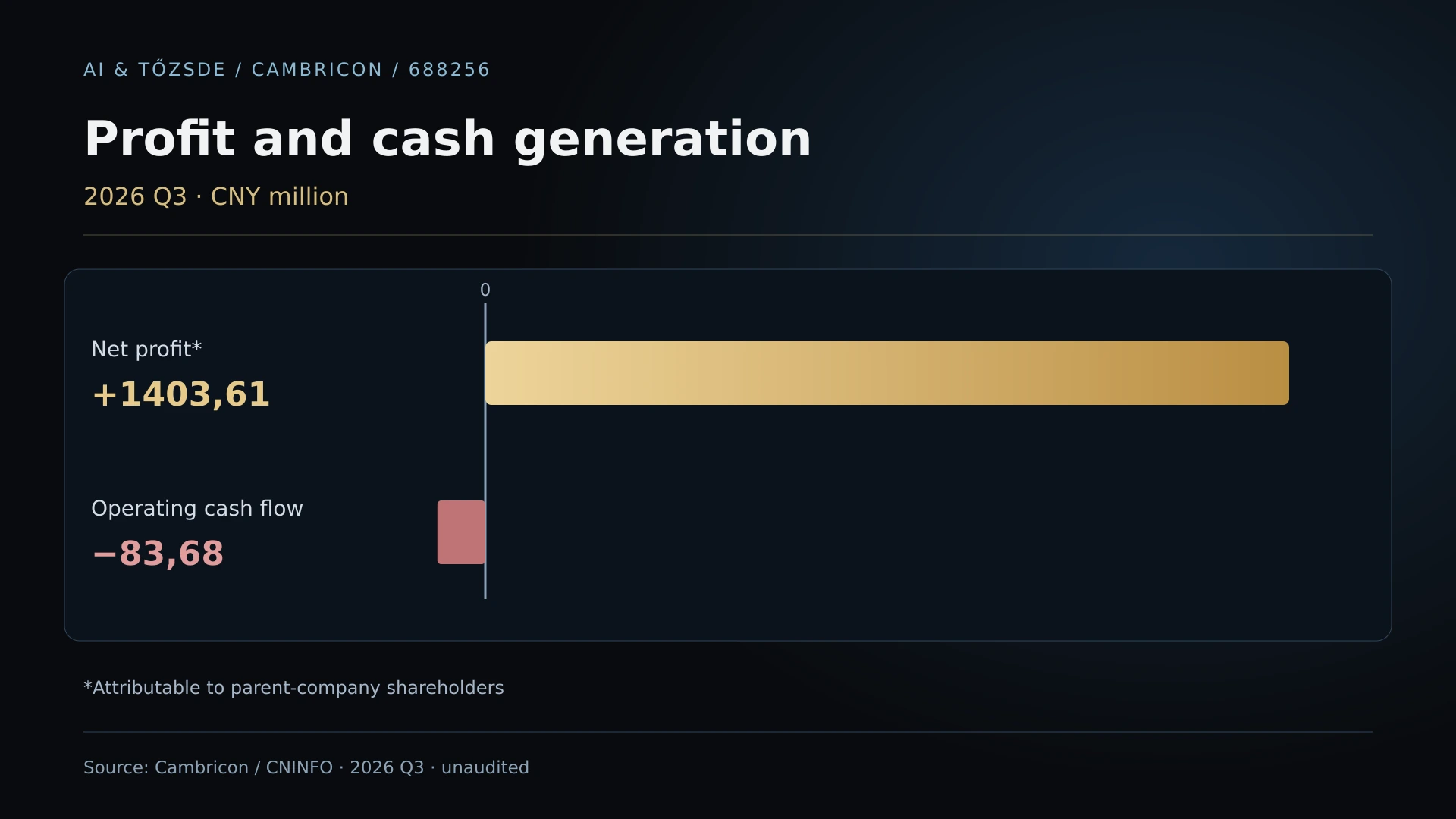
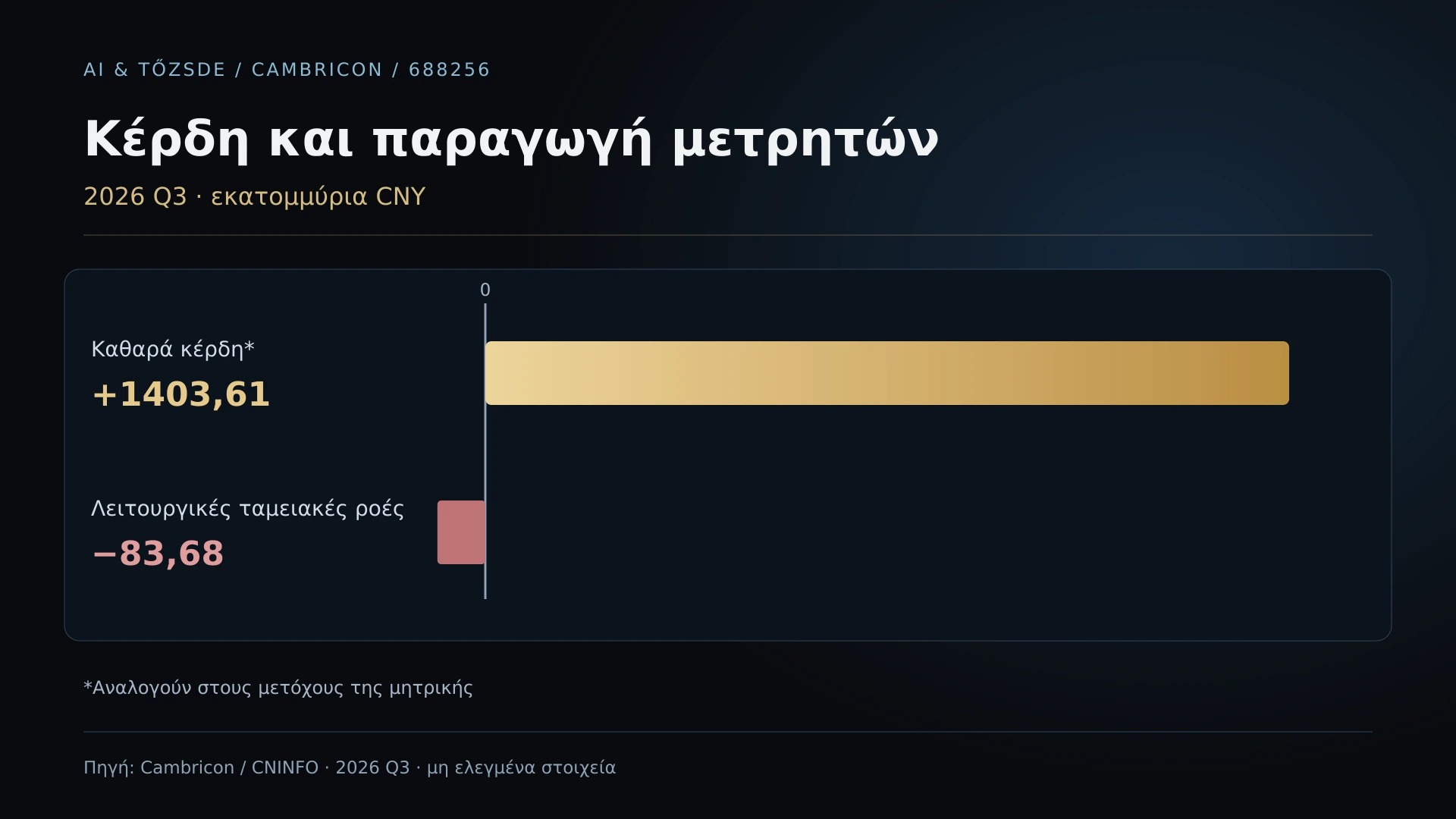
| Net profit attributable to parent-company shareholders | 1403,61 | 3714,52 |
| Operating cash flow | −83,68 | 227,64 |
Quarterly cash flow is negative, while the first nine months are positive. We therefore do not compare nine-month profit with quarterly cash flow. Operating cash flow is not the same as free cash flow or the change in total cash holdings. [1]
Where should we look for tied-up funds?
| Indicator | 2026-09-30 | 2025-12-31 |
|---|---|---|
| Inventories | 11664,66 | 4943,53 |
| Prepayments | 3044,36 | 744,54 |
| Trade receivables | 938,19 | 670,64 |
Our interpretation: higher inventories and prepayments increase the resources tied up in operations. They may support future sales, but sales and cash collection must still validate the return. The difference between these two balance-sheet dates is not a complete bridge for third-quarter cash flow: supplier balances, taxes and other cash movements also matter. [1]
What does the company say?
The report attributes revenue growth to market expansion and support for AI applications. It links the year-on-year improvement in cash flow to stronger sales cash collections. This is management's explanation; it does not replace a detailed examination of quarterly cash movements. [1]
Two conditional interpretations
The favourable interpretation
If inventories sell, prepayments turn into delivered products and customers pay, cash generation may later catch up with earnings. Temporary funding needs during growth could then be manageable. This requires actual cash collection and sustainable margins.
The cautious interpretation
If inventories turn slowly, further prepayments tie up cash or selling prices come under pressure, cash generation may remain weak despite strong accounting earnings. A single quarter does not establish a persistent liquidity problem.
Checks for the next report
- Does operating cash flow catch up?
- Compare profit and operating cash flow over periods of equal length; assess a one-off fluctuation using several reports.
- Inventories and prepayments relative to business activity
- Examine inventory turnover, impairment and the use of prepayments. A larger balance alone proves neither strong demand nor unsold products.
- Is revenue collected at an adequate margin?
- Review receivables, selling prices and gross margin together. Cash from borrowing or issuing shares is not operating cash generation.
What would invalidate the favorable case?
The favourable case would weaken if operating cash flow stayed weak over successive periods while inventories and prepayments grew faster than revenue for the corresponding period, or impairment increased. Sustained improvements in collections, conversion of inventory into cash and preserved margins would weaken the cautious case.
What does this comparison not prove?
The gap between profit and cash flow is not a stand-alone equity valuation. An investment decision also requires examining pricing, competition, technology, regulation and the full balance sheet. We do not know how saleable inventories will be or what the next cash flow will be. The figures refer to the reporting period, not live data.
Sources and methodology
- Cambricon – 2026 Q3 company report on CNINFO ↗
Primary company source. Key figures: pages 1–2; management explanation: page 3; balance sheet: pages 6–8; cash flow: pages 10–12. Dated: 2026-10-23; checked: 2026-10-24.
- SEC – guide to reading financial statements ↗
General educational source on the differences between profit, the balance sheet and cash flow. It does not describe Cambricon's reporting rules.